

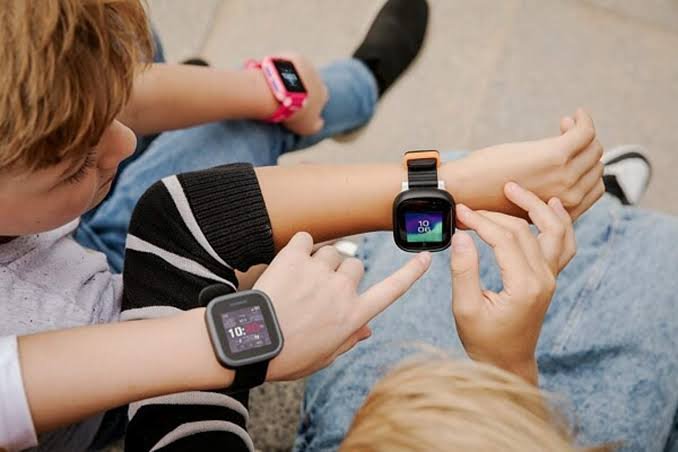
Ask ten parents what kind of watch a child should have and you will get ten answers. Some swear by a simple analogue watch to teach time. Others want a full watch phone from the first day of school. Most are somewhere in between and unsure.
The truth is that the right watch depends far less on the product and far more on the child: their age, their independence, their routine and their maturity. This guide walks through the stages from 5 to 12, explaining what children can typically handle at each age, what parents usually need, and which watch features genuinely matter.
Every child is different, so treat the age bands as a guide, not a rulebook.
Ages 5 to 6: Learning time, building routine
What is happening developmentally: Children are starting formal school, learning numbers, and beginning to understand sequences like “after lunch” and “before bedtime”. They are almost always supervised.
What they need from a watch: Mostly, a tool to learn time and a sense of routine. A simple analogue or digital watch with large, clear numbers is perfect for learning.
Do they need a watch phone? Usually not for safety, since they are rarely without an adult. Some families do choose one for specific situations, such as children who travel between two homes, take a school bus, or have a medical condition. In those cases, simplicity is key: approved contacts only, no distractions, and a sturdy build.
Features that matter: Durability, comfort, a breathable strap, and easy-to-read time.
Ages 7 to 8: The first tastes of independence
What is happening developmentally: Children start doing small things alone: playing in the society park, going to a friend’s flat in the same building, taking the school bus without a parent waiting at every stop. They can follow multi-step instructions and remember simple safety rules.
What they need from a watch: This is the age where many parents first consider a watch phone. The child is not fully independent, but there are now moments when a parent cannot see them.
Features that matter:
- Calling with parent-approved contacts only.
- Basic location tracking so parents can check where the child is.
- Stranger-call blocking.
- Class Mode, because schools will not tolerate distractions.
- A simple interface the child can use confidently.
What to avoid: Anything with an open browser, app store or social features. At this age, a closed system is non-negotiable.
Ages 9 to 10: Growing independence and responsibility
What is happening developmentally: Children at this age can be remarkably capable. Many walk short distances alone, attend activities on their own, and start making small decisions independently. They also begin to care about how their belongings look, and they start comparing gadgets with friends.
What they need from a watch: A watch phone that supports this new independence without overwhelming them. This is often the sweet spot for a fuller-featured kids’ smartwatch.
Features that matter:
- Reliable 4G voice and video calling.
- Accurate multi-system location tracking for longer, more varied routes.
- Safe zones that notify parents when the child reaches school, tuition or home.
- Messaging and voice notes with approved family and friends.
- A larger, clearer display, which makes video calls and reading messages easier.
- Water resistance suited to swimming and sport.
- A battery that lasts a long, active day.
The conversation to have: Explain clearly what the watch shares, who can see it and why. At 10, children deserve to understand the rules, not just follow them.
Ages 11 to 12: Bridging to the smartphone years
What is happening developmentally: Pre-teens want autonomy and privacy. They may commute further for coaching or sports, and peer pressure about smartphones and social media intensifies sharply.
What they need from a watch: A device that covers safety and communication while delaying open internet access, and that looks grown-up enough that they will actually wear it.
Features that matter:
- Cleaner, more mature design and colours.
- Messaging that supports their social life within approved contacts.
- School Mode for secondary-school rules.
- Travel-friendly connectivity if the family travels or the child commutes.
- Gradually relaxing controls as trust builds.
The bigger picture: Many families use the watch years to prepare for the smartphone: talking about privacy, online behaviour, and screen time. Children who move to a phone after a couple of years with a watch often adapt more responsibly.
A quick decision guide
- Is the child often without direct adult supervision? If yes, a watch phone with calling and location makes sense. If no, a simple watch may be enough for now.
- Does the child travel regularly, whether by school bus, van, cycle or metro? Location tracking and safe zones become valuable.
- Does the child swim or play outdoor sport? Check water resistance carefully.
- Is the child under pressure to get a smartphone? A grown-up-looking watch phone can buy valuable time.
Questions parents often ask
Will a watch make my child more dependent on me?
Used well, it does the opposite. It allows parents to say yes to independence they might otherwise refuse.
Is it too early to track my child?
Tracking is a tool, not a relationship. Explain it, agree on rules, and check less as trust builds.
What about screen time?
Watch phones built for children have small screens, no browser and no social media, so they are very different from tablets and phones.
Should I buy a cheaper watch first and upgrade later?
Very cheap, unbranded watches often compromise on data security and reliability. It is usually better to buy one well-built watch that will grow with your child for several years.
Choosing a watch that grows with your child
The best investment is a watch that suits your child now and still feels right in two or three years. imoo specialises in children’s watch phones, and its range spans these stages, from the straightforward Z1 to the feature-rich Z7. For many families, the Z3 hits the middle ground as a smartwatch for 10-year-olds that will still suit them at 12: it offers a larger 1.5-inch display, HD video calling, location tracking using GPS, GLONASS, QZSS and Wi-Fi, 20-metre water resistance for swimming, 8 GB of storage, Class Mode and stranger-call blocking, with no open internet or social media.
The bottom line
There is no perfect age for a child’s first smartwatch, only the right watch for the stage your child is at. Watch your child’s routine and maturity, choose features that match their real needs, explain the rules honestly, and loosen them as they grow. That approach turns a gadget into what it should be: a quiet support for a child learning to find their own way in the world.